
 EN
Enamel Ready to Use Powder: Say Goodbye to Traditional Methods—Enamel Manufacturers Achieve Cost Reduction and Efficiency Boost in One Step
For enamel manufacturers, the traditional glaze preparation process involves complex operations. Especially for newly established enamel plants, where the initial investment in hardware facilities—such as ball mills and screening equipment—can easily reach hundreds of thousands of dollars. During ball milling, substantial manual labor is required for raw material blending and parameter adjustment. Human operational errors can easily lead to uneven glaze particle size and unstable performance, directly impacting the firing pass rate of enamel products and resulting in raw material waste and cost losses. Simultaneously, dust and wastewater generated during ball milling subject enterprises to severe environmental remediation pressures, adding extra costs for pollution control.
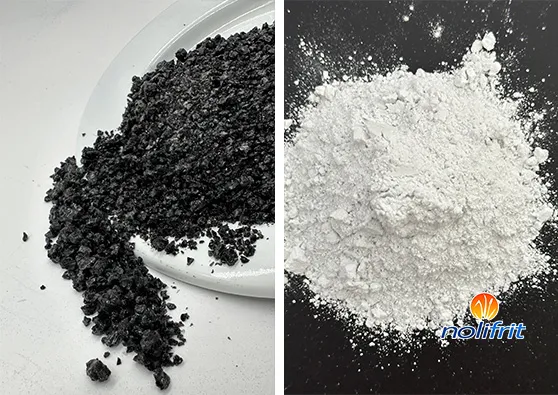
The introduction of enamel RTU powder precisely addresses the pain points of traditional production models. As a ready-to-use formulation eliminating the need for ball milling, this powder employs standardized recipes. It undergoes precise proportioning, fine grinding, and homogeneous mixing throughout the entire production process within enamel glaze factories, achieving a state ready for direct use with water upon leaving the facility. After procurement by the enamel factory, there is no need to invest in ball milling equipment or labor costs. This eliminates cumbersome processes such as ball milling and aging, directly shortening the production cycle by over 30%.
Standardized production processes effectively eliminate manual mixing errors, ensuring consistent particle size distribution, chemical composition, and performance metrics across every batch of enamel RTU powder. This enables enamel manufacturers to boost product firing pass rates from 92% to over 99%, significantly reducing raw material waste. Field tests by multiple clients demonstrate that using enamel RTU powder can lower comprehensive production costs by 25%, delivering tangible cost savings and efficiency gains—the core objectives of operational optimization.