
 EN
Core Operating Specifications for RTU Enamel Powder Spraying Process
For enamel manufacturers, spraying is one of the most common glazing methods for RTU enamel powder, especially suitable for mass production of complex-shaped products (such as daily kitchen utensils and small industrial parts). It has the core advantages of high construction efficiency, uniform glaze layer, and controllable thickness. However, the spraying process has extremely high requirements for parameter control. Slight deviations in details such as spray gun pressure, moving speed, and spraying distance can lead to defects such as uneven glaze layer, splashing, and pinholes, affecting the product qualification rate.
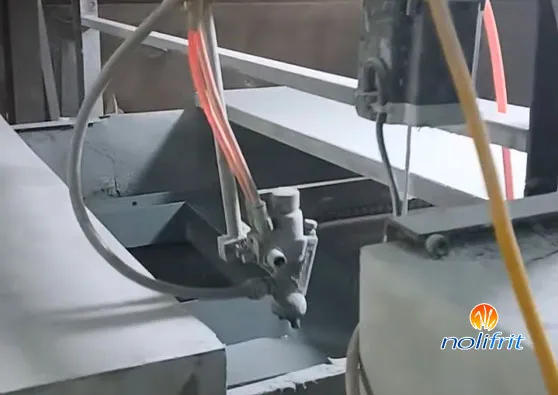
Two key preparatory steps are necessary before spraying to lay a solid foundation for glazing. First, glaze preparation: Select RTU enamel powder suitable for the spraying process and prepare the glaze according to the corresponding water-to-powder ratio (daily use 1:0.4~0.45, industrial 1:0.35~0.4, construction 1:0.42~0.46). After stirring evenly, let it stand for 5~10 minutes to ensure there are no lumps or excessive air bubbles, avoiding introducing air bubbles into the spraying process. Second, substrate treatment: Thoroughly clean the surface of the substrate of the product to remove oil, rust, and dust. Through three steps of grinding, cleaning, and drying, ensure the substrate surface is dry and clean, improve the adhesion between the glaze layer and the substrate, and eliminate the risk of subsequent enamel peeling.
During the spraying process, the operating principles of "uniform speed, verticality, and evenness" must be followed. Operators must wear protective equipment and hold the spray gun perpendicular to the product surface to avoid uneven glaze thickness caused by tilting the spray. The spray gun must be moved at a uniform speed during spraying, avoiding localized pauses to prevent glaze buildup. It is recommended to use a "thin spray, multiple coats" method to avoid applying a thick coat at once and improve glaze uniformity. After spraying, the product should be left to stand for 3-5 minutes to allow the glaze to flow naturally before proceeding to the subsequent firing process.