
 EN
Avoiding Enamel Pitfalls: Maximize RTU Enamel Powder for Quality
In enamel production, the enamel RTU powder is a key raw material that determines glaze quality. Many manufacturers choose high-quality RTU powder, yet still encounter issues such as cracking and pinholes in the final products. The root cause often lies not in the raw materials but in the lack of adherence to operational details. Two common pitfalls include arbitrary adjustments to water quantity and insufficient stirring.
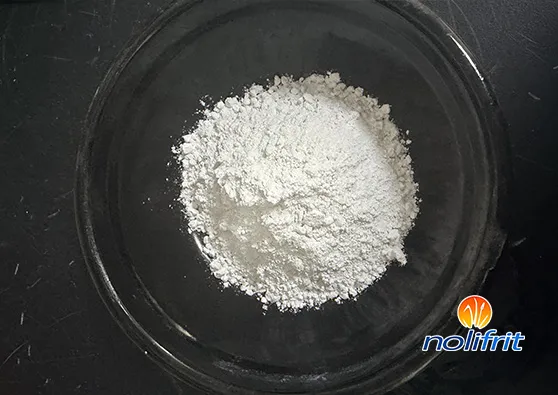
Some production staff, aiming to save time and accelerate progress, make random adjustments to the amount of water added, completely deviating from standard ratios. If the glaze is too diluted, it may run quickly after application, resulting in insufficient thickness and poor coverage, leading to issues like exposed substrate and noticeable color differences after firing. Conversely, if the glaze is too thick, it has poor flowability, making uniform application difficult; this can cause local accumulation during application, leading to cracking or shrinkage during drying and firing, ultimately producing defects. What appears to save a few minutes can significantly increase the defect rate, thereby raising production costs.
Another frequent misunderstanding is insufficient stirring. Many operators assess mixing visually and assume that stirring is adequate as long as no large particles are visible. In reality, small agglomerates may still exist in the RTU powder, which are difficult to detect with the naked eye. If these invisible clumps are not broken up, they can form bumps, pinholes, or pitting after application, negatively affecting the smoothness and density of the glaze. Even subsequent repairs may not yield desired results, severely degrading the product quality.
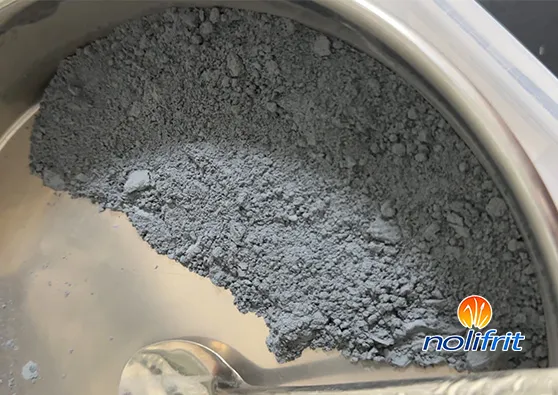
Attention to detail is crucial for maintaining high quality. To effectively utilize enamel RTU powder, standardization and traceability are essential.
Enamel manufacturers should establish strict glaze preparation processes, clearly defining parameters such as water volume, stirring time, and stirring speed, to eliminate reliance on experience alone. Designate responsible personnel for the mixture process and maintain thorough records for each batch to ensure consistency in glaze concentration and uniformity. Additionally, enhance training for frontline workers to convey the direct relationship between standard operations, product quality, and production costs, elevating awareness of the importance of details.
The combination of quality raw materials and standardized operations is the core to enhancing the stability and efficiency of enamel products. By avoiding these two operational pitfalls, manufacturers can significantly reduce glaze defects, improve yield rates, and decrease reworking and raw material waste. This allows enamel RTU powder to perform optimally, delivering tangible benefits to businesses.