
 EN
Practical Guide to Water-to-Powder Ratio for Enamel RTU Powder
For enamel manufacturers, the uniformity of the glaze slurry directly determines the firing quality of subsequent enamel products. In the enamel coating process, even when using high-quality enamel frit or finished RTU enamel powder, improper slurry preparation can still lead to defects. As the first critical step in glaze preparation, the water-to-glaze ratio appears simple yet conceals numerous details that significantly impact production efficiency and product yield rates. Issues like glaze bubbles, pinholes, and peeling frequently encountered by manufacturers often stem from improper mixing practices, rather than inherent flaws in the enamel material itself. Drawing from real-world production scenarios, this article dissects the core principles of water-to-glaze ratio mixing, helping manufacturers improve consistency from the source.
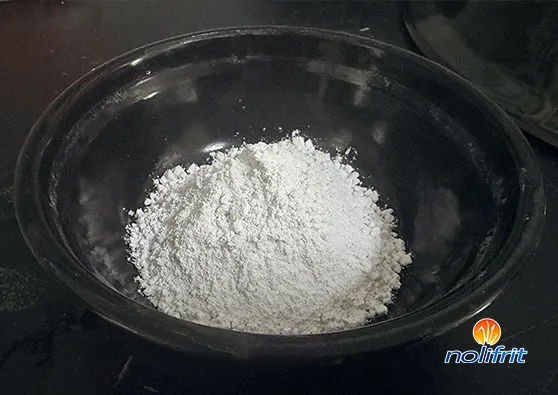
As a standardized enamel glaze, one of the core advantages of RTU enamel powder is its “no additional mixing required—just add water and use” feature. Most modern RTU systems are developed based on stable formulations of porcelain enamel frit, ensuring consistent melting behavior and performance. However, this does not mean manufacturers can operate arbitrarily; three core principles must be strictly adhered to: add water before powder, maintain precise ratios, and ensure thorough mixing. All three are indispensable.
First is the “water-before-powder” principle, which is key to preventing dry powder clumping. Some manufacturers, seeking convenience, directly pour the enamel powder into an empty container before adding water and stirring. This practice easily causes the powder to clump together, forming insoluble particles. When these particles mix into the glaze slurry, they directly lead to uneven glaze application during subsequent processes. After firing, this results in defects such as pinholes and uneven glaze surfaces, significantly increasing rework costs. Even when sourcing from a reliable enamel frit supplier, improper mixing can negate material advantages.
The correct procedure is as follows: first, add the specified amount of clean water to the mixing container. Turn on the low-speed mixer, then slowly and evenly pour the RTU enamel powder into the water while continuously stirring. This ensures every particle—derived from finely milled enamel frit—comes into full contact with the water, eliminating clumping at its source.
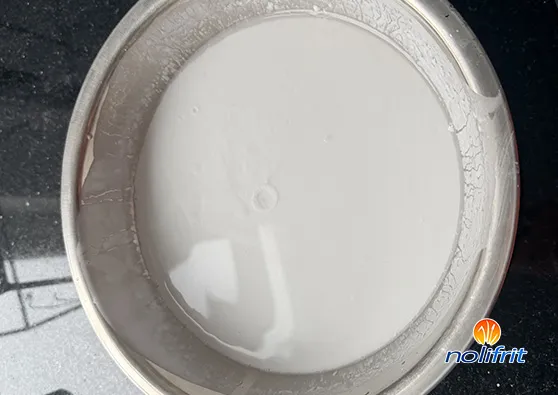
Secondly, precise control of the water-to-powder ratio is essential. The ratio varies significantly across different categories of RTU enamel powder and must be strictly adjusted according to product type—no one-size-fits-all approach applies. Manufacturers must recognize that the core purpose of the ratio is to adapt to subsequent glazing processes and product applications. Even products developed by the same enamel frit factory may require different dilution ratios depending on end-use conditions.
Drawing from industry practices, we have compiled standard ratios for commonly used categories:
- For daily kitchenware applications (e.g., enamel pots, stove grates), recommended ratio: 1:0.4–0.45. This mixture achieves moderate flow properties, suitable for both spray and dip glazing methods, ensuring uniform coverage.
- For industrial acid-resistant applications (e.g., chemical equipment, reactors), recommended ratio: 1:0.35–0.4. These systems—typically based on specialized porcelain enamel frit—require higher concentration and adhesion to maintain corrosion resistance.
- For architectural decorative applications (e.g., curtain walls, decorative panels), recommended ratio: 1:0.42–0.46. This balance improves spray efficiency and surface consistency for large-scale coating processes.