
 EN
Winter Enamel Slip Preparation: Process Risks and Control Priorities Under Low-Temperature Conditions
With the onset of the cold season, changes in ambient temperature directly alter the physicochemical properties of the enamel slip system. Loss of control over slip rheological stability is a high-frequency cause of abnormalities on enamel production lines in winter, and therefore deserves the close attention and advance planning of production managers and technical personnel at enamel manufacturing plants.
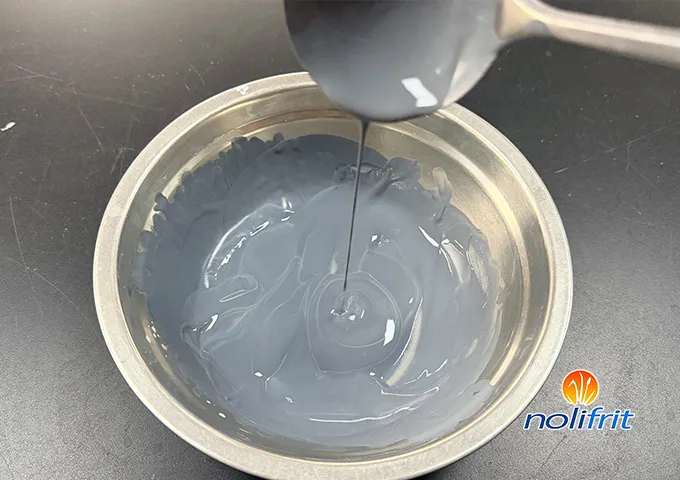
As ambient temperature falls, the solubility of soluble electrolytes in the enamel slip decreases, disturbing the existing ionic balance. Slip thixotropy and suspension characteristics shift accordingly, which macroscopically manifests as excessive fluidity and an overly thin slip. This abnormality directly interferes with application operations such as spraying and dip coating: coating thickness becomes difficult to control consistently, readily triggering surface defects such as pinholes, exposed substrate, and uneven coating thickness.Within the permissible range of the formulation, the clay addition level may be moderately increased to adjust the slip's suspending power and thixotropic structure, keeping slip rheological parameters within the established process window and safeguarding application stability.
One critical control requirement: in principle, milled slip should not be held overnight. At plants in southern regions, nighttime temperatures are relatively high and the risk of slip freezing is low. At northern plants, however, slip is highly susceptible to freezing and agglomerating under low nighttime temperatures.
Once slip freezes, the enamel powder dispersion structure and the binder system suffer irreversible damage, and the slip must be scrapped outright. Hard frozen lumps can also jam the ball mill; the subsequent cleaning is time-consuming and labor-intensive, leading to temporary line stoppages and resulting in material loss and lost output.
Supporting control measures: provide thermal insulation for the milling area and slip storage room, control discharge and storage temperatures, and minimize temperature fluctuation within the slip system. Stable, controllable slip is the foundation of consistency in finished enamel products. Implementing dedicated winter process controls can effectively avoid the sudden quality and downtime risks caused by low temperatures, and ensure continuous, stable operation of the production line.