
 EN
How should manufacturers of enamel stove grates select black direct-on enamel RTU powder?
Black direct-on enamel RTU powder is a core raw material in the production of enamel stove grates; it directly determines the product's visual texture, performance characteristics, and production costs. When selecting this material, manufacturers must evaluate the powder's properties against the stove grates' operational requirements—such as high-temperature resistance, corrosion resistance, and high strength—and focus on key indicators to make a precise selection.
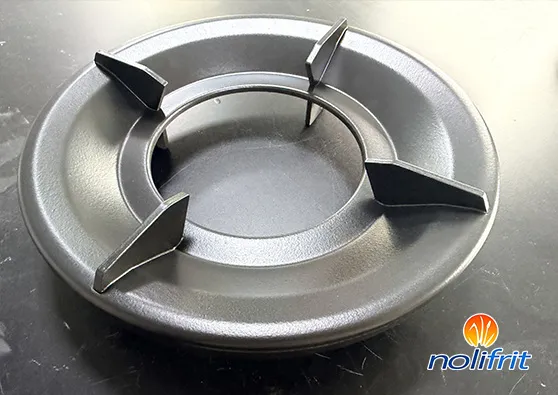
First, prioritize firing compatibility. Select RTU powders designed for a wide firing range at lower temperatures—specifically compatible with the standard 800–850°C range. These materials offer stable heating and uniform melting, thereby reducing energy consumption while preventing issues such as porcelain detachment or cracking associated with temperature fluctuations. They are well-suited for mass production on assembly lines, ensuring a high yield of qualified finished products.
Secondly, strict control over the fundamental quality of the powder is essential. Products with a uniform particle size distribution and an absence of agglomerates or impurities must be selected. High-quality RTU powder eliminates the need for secondary ball milling and facilitates easy slurry preparation; this effectively reduces defects such as bubbles, pores, and pinholes on the ceramic surface, ensuring a uniform color and high gloss for the black glaze, thereby enhancing the visual quality of the stove rack.
Prioritize the verification of functional performance indicators. Since the furnace frame is constantly exposed to high temperatures, cooking fumes, and mild acidic or alkaline residues, the selected powder must exhibit excellent metal adhesion, heat resistance, and corrosion resistance. It should be compatible with cold-rolled steel and common stainless steel substrates, ensuring that the fired enamel coating is dense and durable—resistant to chipping, fading, and rusting.
Finally, consider both cost-effectiveness and after-sales support. Opt for enamel RTU powder products with stable formulations and minimal batch-to-batch variation to reduce raw material waste and rework costs. Additionally, select a manufacturer capable of providing sample testing and technical customization to align the materials with your specific production equipment and processes, thereby enhancing quality while lowering costs.