
 EN
Contact Us
Building 4, Power Valley Industrial Park, Majiahe Street, Tianyuan District, Zhuzhou City, Hunan Province, China
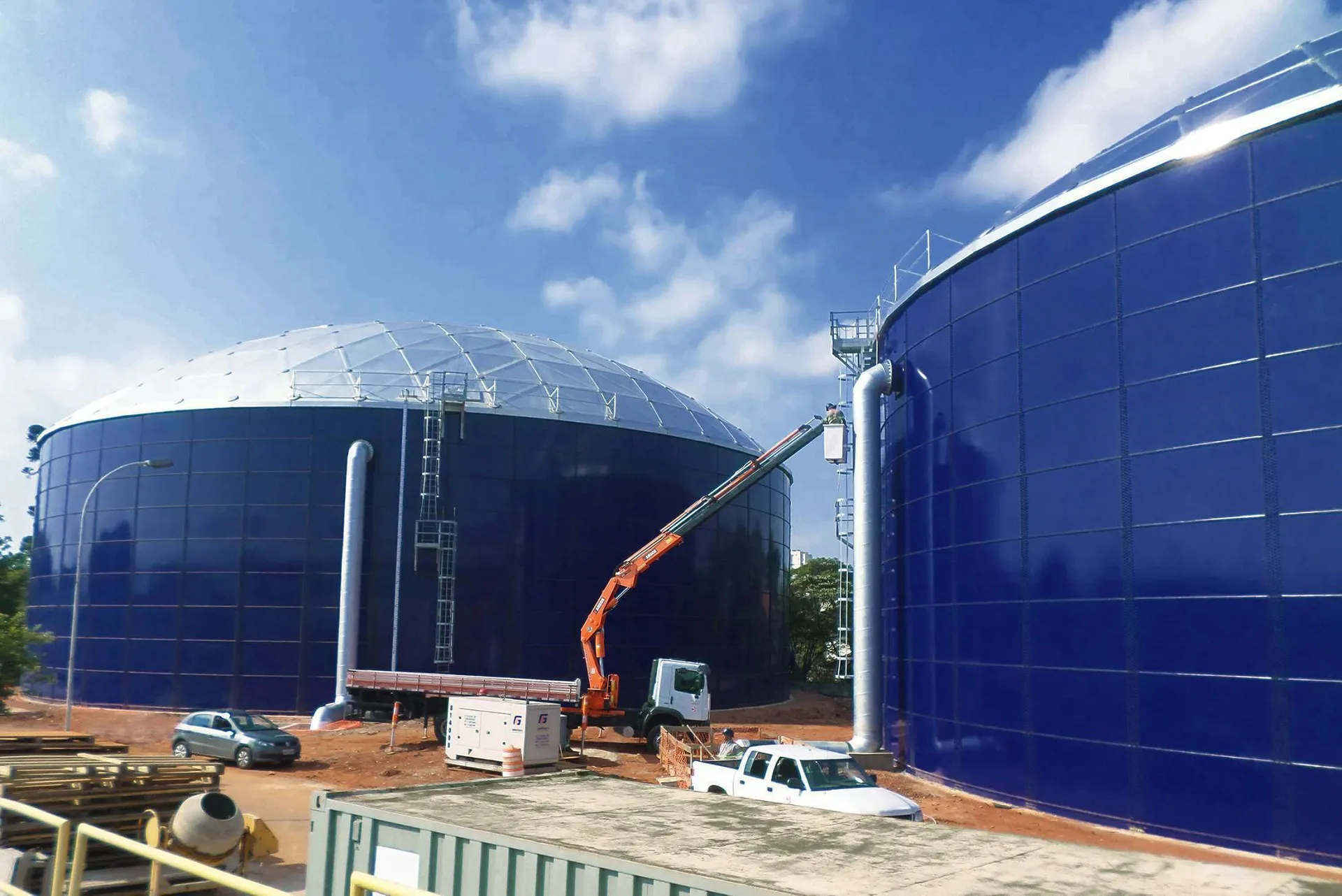
RTU Enamel Powder for Bolted Steel Tanks and Silos
Two ready-to-use powders for bolted steel tanks and silos: a blue acid-resistant grade and a grey grade specified for fish-scale resistance.
Product Description
Ready-to-use enamel powders for bolted steel tanks and silos, in two variants: a blue acid-resistant grade and a grey grade specified for fish-scale resistance. Both are wet-process products fired on steel.
- ProcessWet
- VariantsBlue / Grey
- Firing850 °C / 880–900 °C
- AcidA / no claim
Fish-scale resistance
The grey grade is specified for its fish-scale resistance. A good anti-fish-scale result depends on the firing temperature and the time at temperature being controlled together; the schedule for time at temperature is confirmed for the furnace in use. Enamel-grade steel is recommended in preference to ordinary hot-rolled stock.
What the material does well
- Two variants for two requirements. The blue grade is the acid-resistant option; the grey grade is the one specified for fish-scale resistance.
- Thick-film build. Both variants are specified for thick films; the figures are on the two tables below.
- A wet route for large panels. Tank and silo panels are coated by the wet route and fired after coating.
Technical data
Blue acid-resistant grade
| Parameter | Specification |
|---|---|
| Application method | Wet process (slurry) |
| Firing temperature | 850 °C (reference value, on steel; not a fixed setting for every part) |
| Colour | Blue |
| Surface finish | Glossy |
| Acid resistance | A |
| Coating thickness | Single coat ≥250 µm; double coat 420–550 µm |
A is the result recorded on the citric acid test for this grade. The thickness figures describe the coat build for this grade.
Grey fish-scale-resistant grade
| Parameter | Specification |
|---|---|
| Application method | Wet process (slurry) |
| Firing temperature | 880–900 °C |
| Colour | Grey |
| Surface finish | Glossy |
| Acid resistance | - |
| Coating thickness | 120–160 µm |
| Substrate | Low-carbon hot-rolled steel; enamel-grade steel is highly recommended |
The data sheet for this grade makes no acid-resistance claim. A dash means that the data sheet of that grade does not list the item; it is a statement about the data sheet, not about the material.
What the line has to provide
- Substrate and pre-treatment. As set out on the data sheet of the variant being used; panels are coated before assembly.
- Panel handling. Wet application and firing arrangements able to take the panel size being produced.
- Furnace capability. A furnace able to reach the firing temperature of the variant with the load in it.
- Firing conditions assessed on the part. The setting and dwell that suit a given panel follow its size, mass and geometry and the way the furnace is loaded, and are agreed with our technical team.
Outside this range: these variants are for steel tank and silo panels. Parts in cast iron, stainless steel, aluminum, galvanized steel or pre-coated steel are assessed separately with our technical team.
Questions we are asked
- How do I choose between the blue and the grey variant?
- By the requirement on the part: an acid-resistance requirement points to the blue grade, a fish-scale requirement to the grey one.
- Why does the grey variant carry no acid claim?
- Its data sheet makes no acid-resistance claim. That is a statement about the sheet, not about the material.
- How many coats are needed for a thick film?
- The two figures on the blue table describe the single-coat and double-coat build. Which one applies is settled with the part and the specification.
Next step
Send the panel drawing, the substrate and your firing conditions. We will confirm the variant and take the firing assessment from there.
Send the part detailsValues describe the grades, not a guarantee for a particular part. The data sheet issued with a quotation carries the binding figures.