
 EN
Contact Us
Building 4, Power Valley Industrial Park, Majiahe Street, Tianyuan District, Zhuzhou City, Hunan Province, China
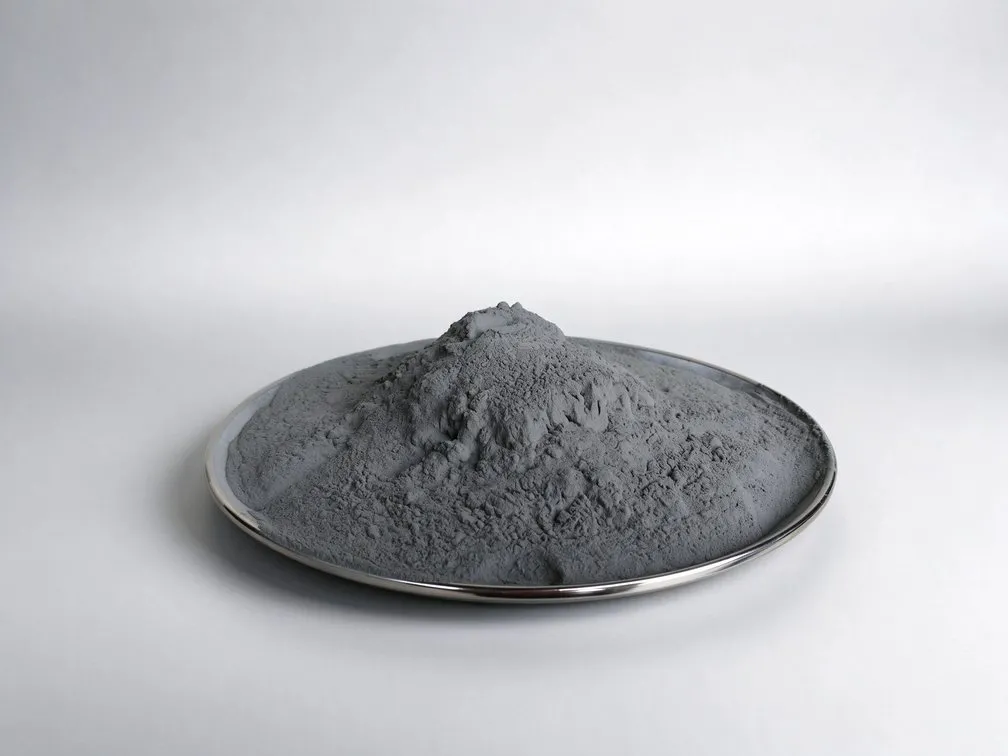
Black Electrostatic Enamel Powder
Two glossy black powders for dry electrostatic enameling of steel — one standard, one acid-resistant.
Product Description
Black porcelain enamel powder for dry electrostatic application on steel, fired at a nominal 850 °C. Used for gas stove parts, oven panels and trays, BBQ grills and bakeware.
- Firing temperature850 °Cnominal, on steel
- Black gradesTwoboth glossy; one acid-resistant
- AdhesionGrade 1–2both grades
- After sprayingNo drying stepbooth to furnace
- Glossy black Glossy black, the standard grade for stove, oven and grill parts.
- Acid-resistant black Also glossy black. A+ on the 10% citric acid test, with a fired film of 120–150 µm specified for this grade.
What the material does well
- No slurry preparation or drying step. The powder is applied by dry electrostatic spraying, and the coated part proceeds to firing without an intermediate drying step.
- Film build controlled during spraying. The deposited layer depends on the equipment settings, part geometry and line conditions.
- Simple-to-moderate geometry. Plates, panels, trays and grill bodies — parts where consistent coverage over the working surface matters more than coating inside a deep recess.
- One process, two grades. Both grades are applied the same way and both fire to a glossy black finish. The acid-resistant grade adds the acid result and a specified fired film.
Where it is used
- Gas stove plates, burner caps and pan supports — high-volume parts coated in a single color.
- Oven panels and trays — flat and shallow-formed parts.
- BBQ grills.
- Bakeware.
Application is by electrostatic spray: the powder is charged, sprayed onto the part, and the layer builds directly on the workpiece. The coating reaches the part dry, so firing follows spraying.
This page covers the material. Line layout, firing practice and what changes the result on a specific part are treated on the gas stove, oven and BBQ application page.
Technical data
Values describe the grades, not a guarantee for a particular part. The data sheet issued with a quotation carries the binding figures.
Product specifications, common to both black grades
| Parameter | Specification |
|---|---|
| Substrate | Low-carbon cold-rolled steel; enamel-grade steel recommended |
| Surface preparation | Degreasing or acid pickling as the part requires; no rust, dust or oil before coating |
| Application method | Dry electrostatic spraying |
| Firing temperature | 850 °C (reference value, on steel; not a fixed setting for every part) |
| Color | Black |
| Surface finish | Glossy |
| Adhesion | Grade 1–2 on each grade |
Differences between the two grades
| Parameter | Glossy black grade | Acid-resistant black grade |
|---|---|---|
| Acid resistance | - | A+ on the 10% citric acid test |
| Fired film thickness | - | 120–150 µm |
| Specify it when | No specific acid-resistance requirement | An acid-resistance requirement applies to the part |
A+ is a result recorded on the 10% citric acid test, not a certified or general rating. A dash means that the data sheet of that grade does not list the item; it is not a statement about what the grade can do.
Choosing between the two black grades
What decides between them is the acid-resistance requirement written for the part, together with the fired film thickness that requirement calls for. Both are set out in the comparison above.
Final selection should be based on the part’s specified requirements and application conditions. Our technical team can help assess the suitable grade.
What the line has to provide
- Substrate and pre-treatment. Low-carbon cold-rolled steel, prepared as set out under Technical data before the part reaches the booth.
- Electrostatic equipment. A high-voltage generator and a spray gun, run at settings that suit the part being coated.
- Furnace capability. A furnace able to reach the nominal 850 °C with the load in it. The figure is a design point for the grade, not a reading at the furnace door and not a fixed setting for every part.
- Firing conditions assessed on the part. The setting and dwell that suit a given part follow its size, mass and geometry and the way the furnace is loaded, and are agreed with our technical team.
Outside this range: these grades are confirmed for low-carbon cold-rolled steel. Cast iron, stainless steel, aluminum, galvanized steel and pre-coated steel are outside the confirmed scope of these grades; a part in one of those substrates is assessed separately with our technical team, and other product ranges are specified separately. Where a part has a deep recess or an enclosed interior that has to be coated completely, the suitable process route is assessed with the technical team.
Questions we are asked
- Is a drying step needed after spraying?
- No. The part goes from the booth to the furnace. Drying belongs to wet processes, where water has to be removed before firing.
- Which of the two grades should we specify?
- Where acid resistance is a specified requirement, consider the acid-resistant black grade, subject to confirmation of the application conditions. Where no specific acid-resistance requirement applies, the standard glossy black grade may be considered, provided it meets the other requirements for the part.
- How is the firing condition settled?
- 850 °C is the nominal firing temperature of these grades on steel, not a fixed setting for every part. The temperature and dwell that work on a given part depend on its size, mass and geometry and the way the furnace is loaded, and are assessed with our technical team.
- What do you need to assess an application?
- The substrate grade and thickness, the part and its geometry, the application method available at your plant, and the firing equipment you can reach. A drawing or a photograph with approximate dimensions helps, but is not needed for a first answer.
Next step
Send the substrate, the part and your firing conditions. We will confirm whether the dry process fits the part, say which grade matches the requirement, and take the firing assessment from there.
Produced at our plant in Zhuzhou, Hunan, China.